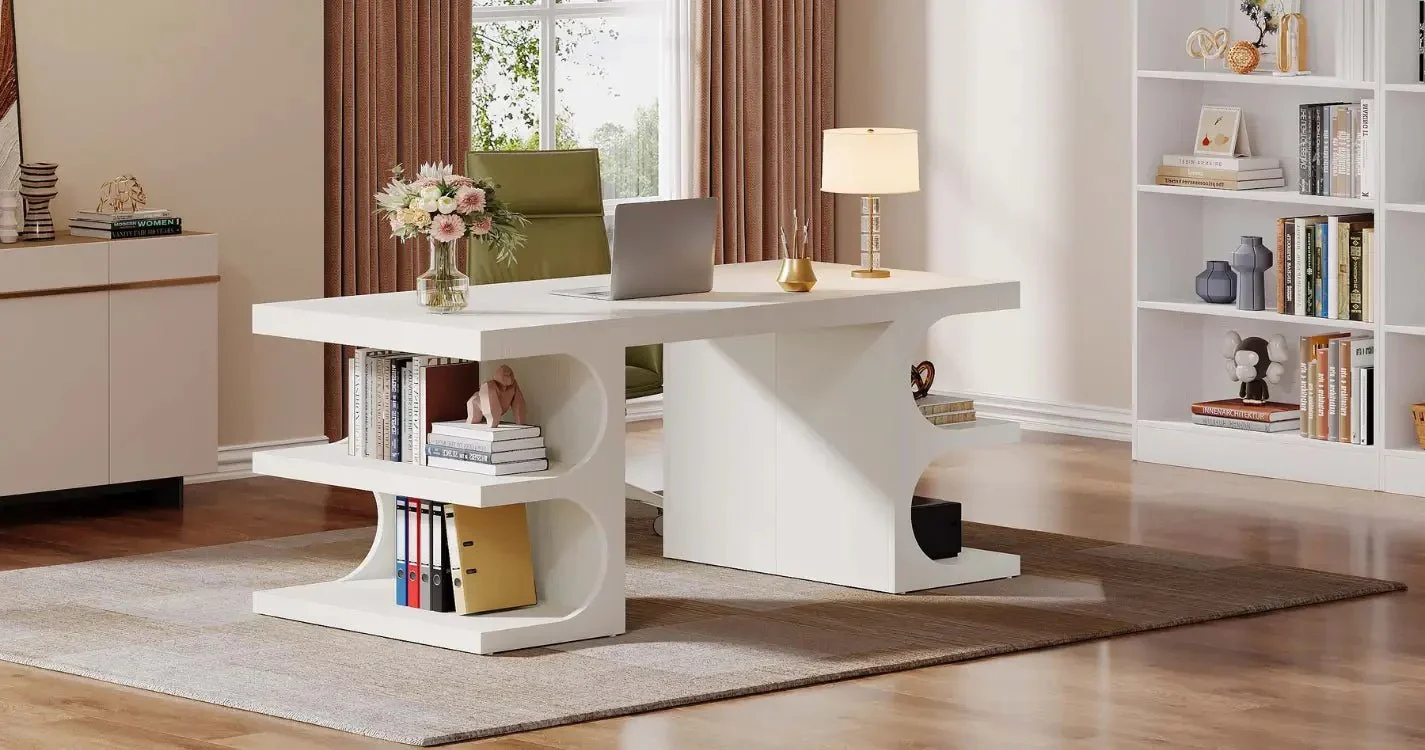

Choosing between a wooden desk with metal legs and a fully metal desk really comes down to what you value most in terms of tactile comfort and the overall look of your workspace.
A wooden desk with metal legs – often described as a hybrid – is the go‑to option for home offices because it manages to combine the industrial strength of metal with the inviting warmth of timber. A fully metal desk, on the other hand, tends to be selected for its exceptional durability and for those who favour a distinctly industrial or tech‑inspired aesthetic.
Wooden Desk with Metal Legs vs Fully Metal Desk – A Quick Comparison
|
Feature |
Wood Top with Metal Legs |
Fully Metal Desk |
|
Overall Feel |
Warm, natural, more comfortable for daily use |
Cool, hard, more utilitarian |
|
Best For |
Home offices, study spaces, hybrid work setups |
Workshops, industrial spaces, minimalist or heavy-duty setups |
|
Style |
Easy to match with most interiors |
Strong industrial, modern, or utility look |
|
Maintenance |
Needs a little care to avoid stains, scratches, or moisture issues |
Easy to wipe down and keep clean |
|
Durability |
Durable, but surface can show wear over time |
Extremely durable and built for rougher use |
|
Repairability |
Solid wood tops can often be sanded and refinished |
Dents and chips are harder to fix cleanly |
|
Noise |
Softer and quieter while typing |
Can feel louder or more resonant |
|
Everyday Comfort |
Better for long hours at a desk |
Better if practicality matters more than feel |
Key Factors to Consider
- Ergonomics and Comfort – If you spend long hours typing, a wooden surface is generally more forgiving. Wood acts as a natural absorber of the kinetic energy from your movements, whereas metal can amplify vibrations.
- Visual Impact – The hybrid style works beautifully if you want the desk to feel like part of the home, blending with plants, leather, or textiles. An all‑metal desk suits high‑tech or minimalist interiors where you want the desk to recede into the architectural background.
- Repairability – Although metal is harder to damage, once it’s dented or chipped it’s almost impossible to restore. Solid wood, by contrast, can be sanded and refinished several times to erase years of wear.
- Weight and Stability – Fully metal desks with tubular frames are often lighter and easier to move, but heavy‑duty ‘tanker’ styles can be extremely heavy.
Why Wooden Desks with Metal Legs Are So Widely Chosen
A desk with a wooden top and metal legs strikes the middle ground that most people actually want.
You get the visual warmth of timber, which helps the desk sit naturally in a bedroom, study, or living‑area office. At the same time, the metal legs keep the frame stable and give the desk a cleaner, more contemporary edge than a solid wood piece. That combination works especially well when your workspace is part of your home rather than a separate commercial office.
It also tends to feel more pleasant during long work sessions. Your hands and forearms rest on a surface that feels less harsh, less cold, and more natural. That might sound like a minor detail, but if you’re at your desk every day, it soon becomes important.
A wooden office desk with metal legs is usually the better choice if you want:
- a desk that stays comfortable for extended periods
- a style that works well with rugs, plants, bookshelves, or soft furnishings
- a workspace that feels like a natural part of your home
- a balance between durability and good looks
At Tribesigns, we design our desks to combine the warmth of a wood‑grain surface with the reliability of a reinforced metal base. The result is a desk that feels more inviting than an all‑metal piece, without sacrificing everyday sturdiness. Across our executive and writing desk collections, we consistently focus on what home‑office buyers value most: a spacious work surface, a steady frame, and a clean, modern look that fits easily into real living spaces.

Why Some Buyers Still Prefer a Fully Metal Desk
A fully metal computer desk has a very different appeal.
It’s less about warmth and more about practicality. It looks sharper, feels harder, and generally demands less upkeep. If you need a desk that can cope with heavier use, frequent cleaning, or a more industrial environment, metal makes good sense.
That’s why fully metal desks often appeal to buyers setting up:
- a workshop‑style area
- a minimalist tech room
- a utility‑focused workspace
- a high‑use station with equipment, tools, or multiple accessories
It’s also a strong choice if you simply prefer the look. Some people don’t want a desk to feel soft or domestic – they want it to feel clean, disciplined, and purely functional. A fully metal desk delivers that more effectively.
What to Look For Before You Make a Decision
Whichever direction you lean towards, don’t stop at the headline material.
1. Check what the ‘wood’ actually is
Not every wooden desk is solid wood. Some use engineered wood, MDF, veneer, or laminate. They can still look great, but they won’t all age or repair in the same way.
2. Look closely at the frame design
A good metal frame matters more than marketing language. Crossbars, leg shape, support points, and foot pads all affect stability.
3. Think about your actual habits
If you drink coffee at your desk, eat lunch there, or tend to drag objects across the surface, the way the material behaves matters. Some buyers love wood until they realise they don’t want to treat it with extra care.
4. Match the desk to the room
A desk doesn’t sit in isolation. Consider how it looks alongside your flooring, wall colour, lighting, and other furniture.
5. Prioritise depth and usable space
A beautiful desk is still a poor purchase if it’s too shallow for your monitor setup or too narrow for the way you work.
Comfort Matters More Than You Might Think
This is where the difference becomes most obvious in daily use.
A wooden surface feels warmer and softer. It’s generally more pleasant for typing, writing, or resting your arms on throughout the day. It also helps reduce that overly hard, ‘cold workspace’ feeling that some metal desks can create, especially in air‑conditioned rooms.
A fully metal desk, in contrast, can feel colder and more rigid. It may also produce more surface noise – typing, moving a mouse, putting down a mug, or sliding accessories across the desk can sound a little harsher.
If your desk is where you spend eight hours working, comfort shouldn’t be treated as a minor afterthought. It ought to be one of your first considerations. After all, a comfortable home office desk is one that supports you well over the long term – and for most people, that points firmly towards a wooden top with metal legs.