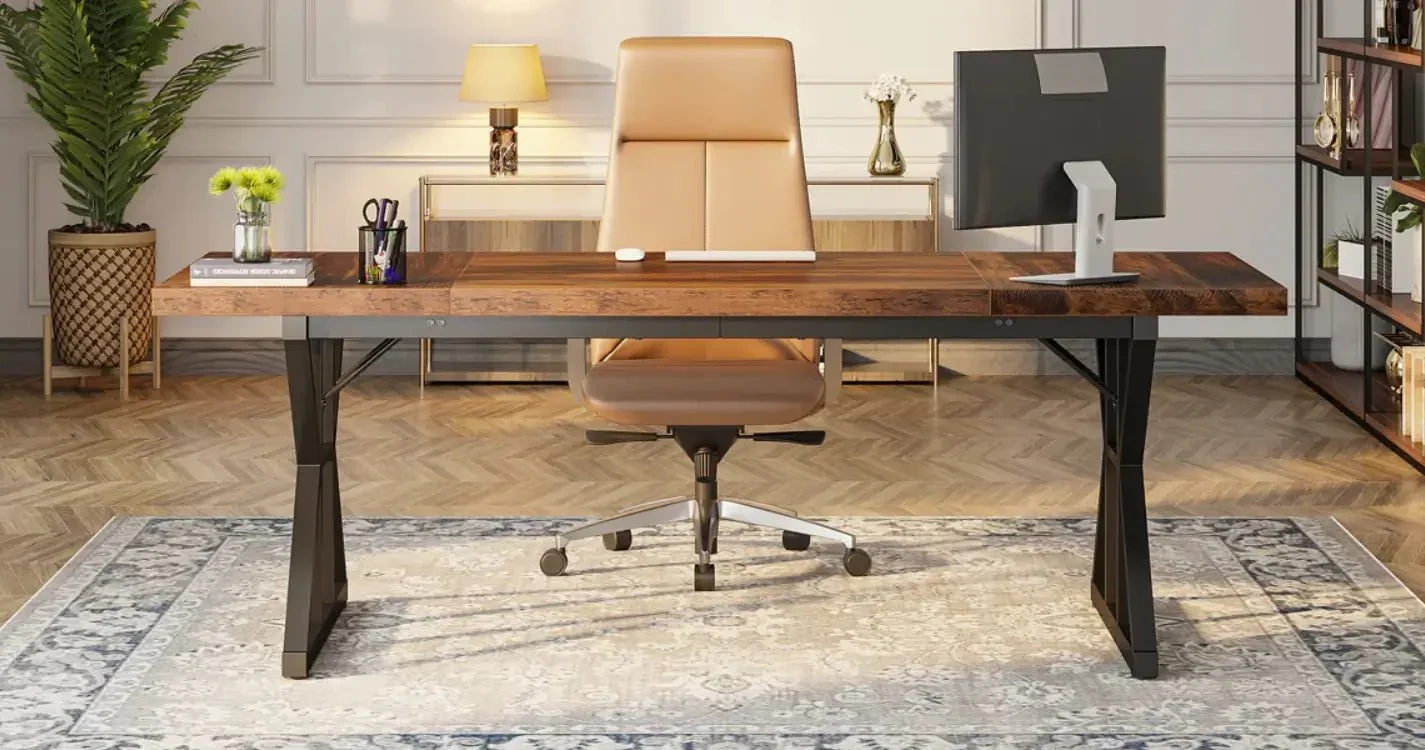

In feng shui, the most favourable desk arrangement is typically one that gives you a sense of backing, allows a clear view of the entrance, and does not leave your back exposed to the rest of the room or to a large window. When translated into a real‑life home office setting, this principle usually results in a calmer atmosphere and better endurance through a long working day.
Once a window is part of the equation, the decision narrows: should the desk look out onto it, sit beside it, or stand perpendicular to it? For the vast majority of home workspaces, the most straightforward answer is the wisest – keep the window off to one side, rather than squarely in front or directly behind you. This advice is also echoed by workplace ergonomics guidance, which suggests placing display screens at right angles to windows and main light sources in order to cut down on glare.
What Is the Ideal Feng Shui Desk Position?
The home office furniture market in the US was estimated at $6.94 billion in 2026 and is projected to climb to $9.67 billion by 2031, while the telework rate among private‑sector employees stood at 20.8% in April 2025. With more people investing in dedicated workspaces at home, the question of desk placement has moved well beyond niche interest.
The strongest feng shui desk location is usually one where you can see the doorway without sitting directly in its path, and where a solid wall stands behind you. This combination cultivates a greater sense of stability and authority in the room. Feng shui thinking also tends to discourage sitting with your back to a window, as that can feel less secure and less rooted.
Even outside of feng shui, this makes perfect practical sense. A workstation feels far more comfortable when you are not constantly reacting to movements behind you, harsh light at your back, or a doorway you cannot keep an eye on. The room settles into a more peaceful state – and so do you.

Is a Window‑Side Desk Good Feng Shui?
In many cases, yes. A desk set beside a window can be a very effective solution, as it lets in daylight and a feeling of openness while keeping the window out of your direct line of sight. Feng shui practitioners generally view side‑window placements more favourably than having the window straight ahead or directly to your rear.
That balance is worth pursuing because daylight brings genuine advantages. Studies on office environments have found that access to natural light and outdoor views can boost satisfaction and mental performance, while also easing eye strain – especially when shading is properly handled. So the aim is not to shun the window, but to harness it in a way that supports both wellbeing and concentration.
Desk Facing Window vs. Desk Next to Window vs. Desk Perpendicular to Window
Here the choice becomes much clearer.
| Layout | Feng Shui Feel | Workday Reality | Overall Verdict |
| Desk facing the window | Open but less anchored | Can be distracting and more prone to glare | Works in some rooms, but rarely the easiest option |
| Desk next to the window | More harmonious | Good daylight with fewer direct distractions | Often a very solid choice |
| Desk perpendicular to the window | Balanced and supported | Typically best for glare management and screen comfort | Frequently the best all‑round layout |
Desk Facing the Window
Facing the window can be uplifting to begin with – you get a view, abundant daylight, and the room feels less confined. But it can also make sustained focus trickier, particularly if there is regular outdoor activity or if light levels fluctuate dramatically through the day. Feng shui tends to view this as less stable than the command position. There is also an ergonomic downside: a bright window directly in front of the screen can create distracting glare and visual fatigue.
Desk Next to the Window
This is often the sweet spot. You still enjoy natural light, yet it does not tug at your attention all day. The window becomes part of the room’s character rather than the centrepiece of your workstation. In feng shui terms, this feels more even‑keeled than sitting right in front of the glass. In day‑to‑day use, light is easier to manage with blinds, curtains, or a slight adjustment to the monitor’s tilt.
Desk Perpendicular to the Window
For many home offices, this is the layout to try first. When the desk sits at a right angle to the window, the screen naturally aligns away from the main light source – exactly what ergonomic advice recommends for controlling glare. This setup also keeps the window to your side, which generally feels less unsettling than having it directly behind or in front.
In short: a desk placed perpendicular to the window often gives you the finest blend of feng shui harmony, natural illumination, and everyday practicality.
How Should the Door Relate to Your Desk?
Even in a room dominated by a window, the doorway remains important. The strongest layout is usually one where you can see the entrance without being seated directly in line with it. If the desk points straight at the door, the space can feel overly exposed. If your back is to the door, it becomes distracting and leaves you feeling unsupported. Feng shui consistently favours a position where the doorway is visible but not confronting you directly.
If your room is fixed and the desk cannot be moved into the command position, a mirror is a common feng shui adjustment. Its purpose is not merely decorative – it restores your awareness of the room’s entry point.
Practical Tips for a Window‑Adjacent Desk Setup
A well‑planned window‑side desk still needs a few practical tweaks.
Start with the monitor. Ergonomic guidance recommends placing the screen face at right angles to windows and light sources – this single step resolves many common comfort issues. Then fit blinds or curtains so you can modulate light throughout the day. Different blind types suit different window orientations, so choose accordingly.
It also pays to leave a little breathing room between the desk and the glass, rather than pushing everything flush against the window. That gives you more freedom for cable routing, monitor arms, and task lighting, and often makes the workstation feel less cramped. If the area still feels too exposed, a potted plant, a low shelf, or a storage unit can soften the boundary without blocking too much light. The same thinking appears in feng shui: keep the energy open, but not over‑exposed.
Which Home Office Desk Shape Suits a Window Location Best?
Some desk styles are easier to place beside a window than others.
Straight Desk
A straight desk is usually the most straightforward choice for a side‑window or perpendicular layout. It keeps the setup tidy, gives you more flexibility within the room, and works especially well in compact home offices.
Tribesigns offers a broad range of straight desks – from compact writing tables to larger computer desks – making this format particularly easy to adapt to window‑side arrangements.
L‑Shaped Desk
An L‑shaped desk can look superb near a window, especially in a corner office or a room with more than one wall of natural light. The key is to make sure your main seated position still feels properly supported – you do not want the best part of the layout to leave your back facing the door or the window.
Tribesigns’ L‑shaped desk collection includes reversible and corner‑friendly designs, which make it easier to tailor the setup to your specific room shape.
Adjustable Standing Desk
A standing desk placed near a window can be a great option, but it requires careful light management because your eye level changes as you raise or lower the height. This means glare may appear differently than in a fixed seated position.
Final Thoughts
The best feng shui desk placement is rarely about squeezing the desk as close to the window as possible. It is about getting the relationship right – between the desk, the window, and the door.
For most home offices, the strongest setup is one where you can see the doorway, feel supported from behind, and keep the window to your side. When the room allows, a desk set perpendicular to the window often proves the most balanced option – it works well for feng shui, light control, and long hours at the screen.
That is the arrangement we would suggest starting with. It tends to look right, feel right, and continue to serve you well long after the rest of the room is finished.