
When choosing side tables for your homes, material selection plays a crucial role in balancing practicality with aesthetics. From solid oak that develops character over time to versatile MDF that withstands central heating, each material brings distinct advantages to UK living spaces.
This guide examines the most suitable side table materials for your households, helping you select pieces that complement your interior while standing up to daily use.
Understanding Side Tables in the Home
Though modest in size, side tables serve essential functions in our households. They act as reliable companions to sofas and beds, providing landing spots for tea cups, reading lamps, and evening reads. Their versatility makes them equally useful in living rooms, bedrooms, and even hallway spaces.
British climate conditions significantly impact material performance. Central heating during winter months can cause solid wood to contract, while summer humidity may lead to expansion. Placing tables near bay windows exposes them to sunlight that can fade finishes over time. Considering these factors ensures your chosen material will age gracefully in its environment.
Comparing Popular Side Table Materials
1. Solid Wood
Hardwoods like oak and walnut remain premium choices for interiors, developing richer patinas with age.
Advantages: Durable, repairable, natural warmth
Considerations: Requires stable humidity levels, higher investment
Perfect for: Traditional and heritage homes valuing longevity
2. Engineered Wood
MDF and plywood options provide excellent stability amid Britain's changing seasons, making them practical for family homes.
Advantages: Warp-resistant, consistent finish, accessible pricing
Considerations: Limited repair options, avoid excessive moisture
Perfect for: Contemporary interiors and budget-conscious projects
3. Metal
Steel and aluminium frames offer slim profiles ideal for space-conscious British rooms, often paired with wood or glass tops.
Advantages: Strong yet lightweight, clean lines, durable
Considerations: Can feel cool to touch, may require protective coatings
Perfect for: Modern and industrial-inspired interiors
4. Glass
Tempered glass tops create airy impressions in compact spaces, complementing period and contemporary settings alike.
Advantages: Visually light, easy to clean, reflects light
Considerations: Shows smudges, requires regular cleaning
Perfect for: Making smaller rooms feel more spacious
5. Stone
Marble and quartz bring luxury to British interiors, though their weight demands consideration in period properties.
Advantages: Heat-resistant, statement appeal, durable
Considerations: Substantial weight, higher price point
Perfect for: Creating focal points in formal reception rooms
6. Natural Fibres
Advantages: Lightweight, sustainable, casual elegance
Considerations: Best in drier indoor locations
Perfect for: Creating relaxed, contemporary atmospheres
7. Mixed Materials
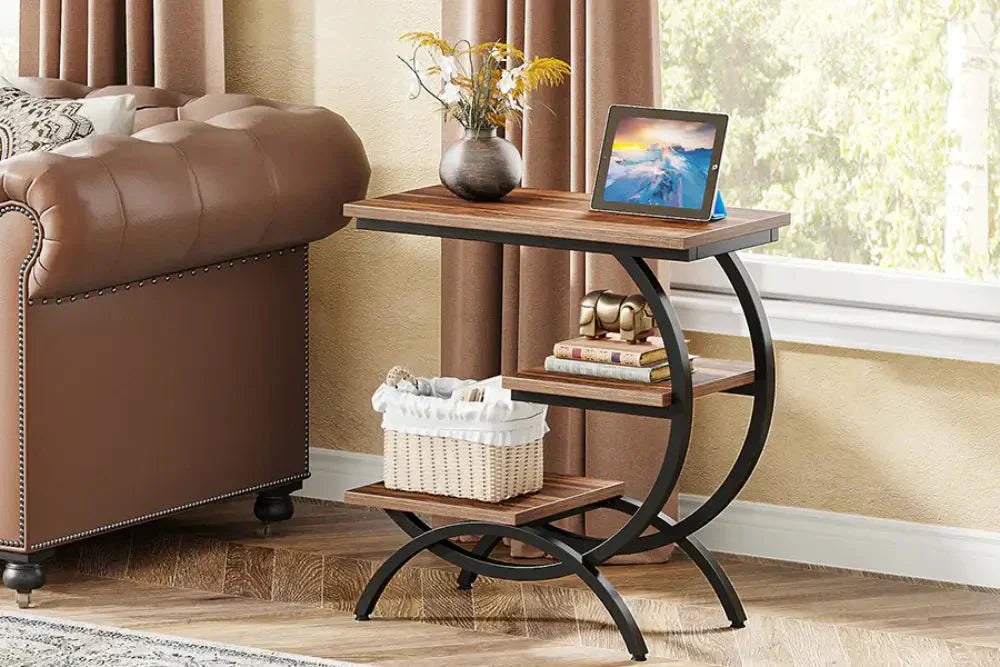
Combining metal frames with wood tops represents Tribesigns' signature approach, balancing durability with visual warmth.
Advantages: Harnesses multiple material strengths, design flexibility
Considerations: Joint integrity matters for long-term use
Perfect for: Modern British homes seeking character and resilience
Making the Right Choice for Your Home
Begin by considering your table's location and purpose. High-use areas benefit from metal or engineered wood, while decorative spaces accommodate more delicate materials. Family households might prioritise sturdy construction, while pet owners may prefer scratch-resistant surfaces.