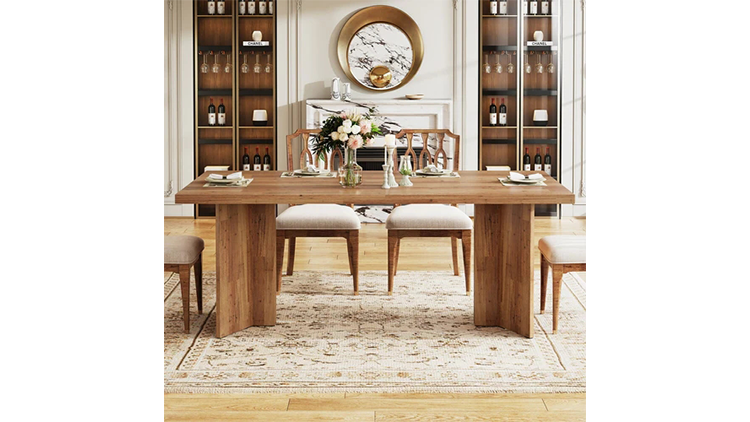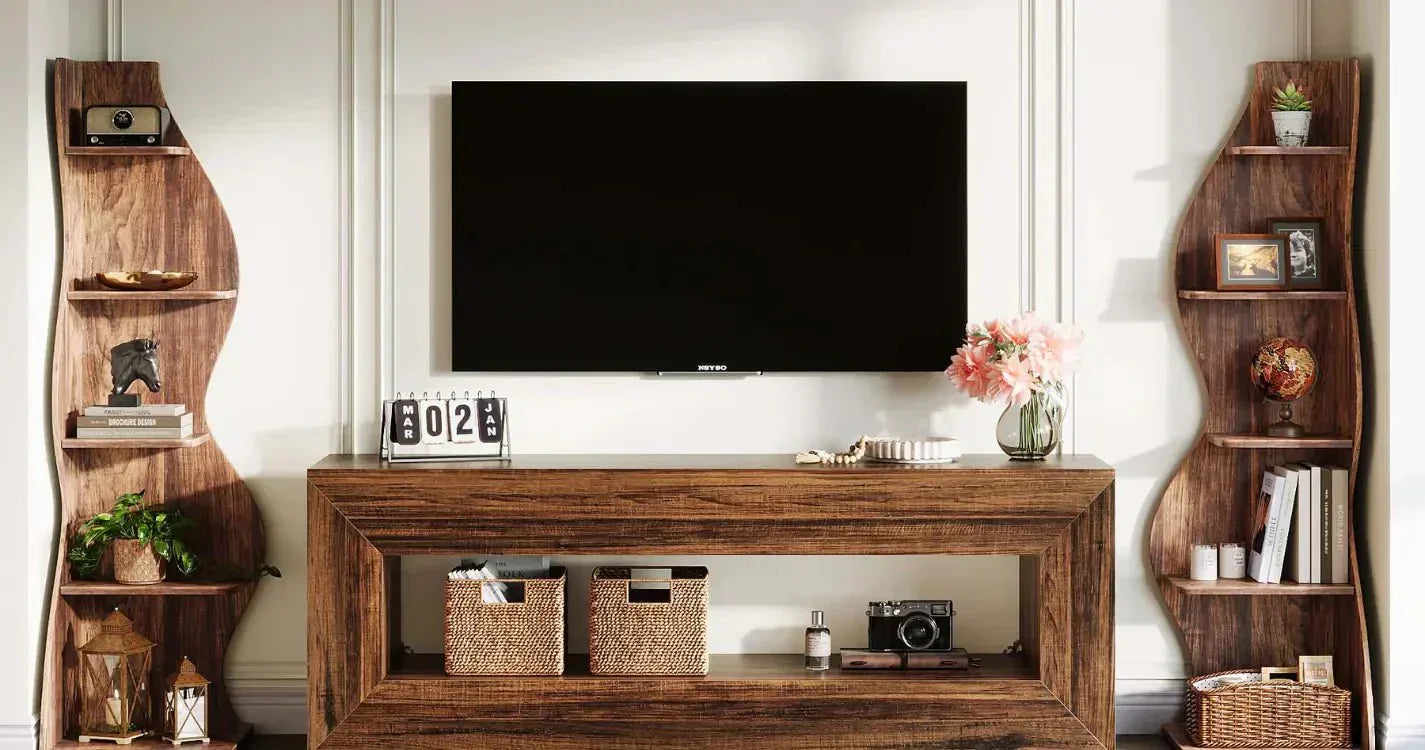

Pairing a TV stand with a coffee table isn’t about buying a ready‑made set. It’s about shaping a room that feels well balanced, practical, and put together with a bit of thought.
In most modern living rooms, people mix their furniture instead of sticking to a strict ‘all matching’ rule. The aim is clear: find pieces that appear to belong together, but without being identical copies.
Here’s how to make that work in real British homes.
Should Your TV Stand and Coffee Table Actually Match?
No, they don’t need to match – and in many cases, they probably shouldn’t.
Matching furniture sets might feel like a safe bet, but they often leave a living room looking flat or overly dressed. What works far better is a feeling of coordination:
- The same design direction, but with different individual items
- Shared features (colour, material, shape)
- Well‑balanced proportions
Your TV stand and coffee table should feel like they’re part of the same overall story – just not the same sentence.

Getting the Size and Scale Right
If the proportions are off, nothing else will look quite right. Here are the main rules that tend to work well in most UK living rooms:
|
Element |
Rule of Thumb |
|
TV stand width |
Wider than your TV |
|
Coffee table length |
About 2/3 of your sofa |
|
Coffee table height |
Same or slightly lower than sofa seat |
|
Distance (sofa → table) |
~18 inches |
|
Distance (table → TV stand) |
24–30 inches |
Even perfectly matched styles won’t rescue a layout that feels cramped or awkward. If you have a large television (65 inches or more), choose a slightly wider media console and avoid bulky coffee tables that take up too much space.
Aligning Interior Design Styles
Start by working out your ‘anchor style’, then build from there. You don’t need a rigid theme, but you do need a consistent feel. If your TV stand is a sleek, mid‑century design with tapered legs, your coffee table should share that same sense of lightness – even if it’s made from a completely different material.
Begin with the overall style, but don’t go for an exact match.
Instead of buying a full set, try to keep the style consistent:
- Modern with modern: clean lines, minimal visible hardware
- Farmhouse with farmhouse: wood tones, rustic textures
- Industrial with industrial: a combination of metal and wood
Then introduce some variety within that style:
- A sleek TV stand paired with a softer, gentler coffee table
- A minimalist console table alongside a table with a bit more texture
Matching Materials and Finishes
Pick one main material and one accent texture. For instance, if you have an engineered wood MDF media unit in a rich walnut finish, you don’t need a walnut coffee table. Instead, try a black metal frame table with a glass top.
Mixing materials creates what designers often call ‘texture friction’ – the good kind. It stops the room from looking like a single solid block of wood. If you’re worried about things clashing, look at the hardware. Matching the brass legs of a coffee table to the brass handles on your TV stand is a subtle way to achieve professional‑looking cohesion without making it too obvious.
- Repeat one material (wood, metal, glass)
- Consistently mix two materials across the two pieces
- Use similar finishes (matte or glossy)
|
TV Stand |
Coffee Table |
|
Walnut wood |
Walnut + black metal |
|
White lacquer |
Glass + chrome |
|
Black metal + wood |
Solid wood |
What to avoid: throwing too many unrelated finishes together all at once (for example oak, marble, gold and glass combined).
Getting the Colours Right
Use the 60‑30‑10 rule for wood and metal tones. Let one wood tone cover roughly 60% of the room (usually the floor or the largest piece of furniture), a second tone for 30%, and a bolder accent for the remaining 10%.
If your TV stand is a dark espresso colour, steer clear of a slightly lighter brown coffee table that almost matches – it will look like a mistake. Instead, aim for a clear contrast. A black or charcoal coffee table creates a refined, deliberate look against dark wood, while a creamy white table stands out beautifully next to mid‑tone oaks.
In 2026, the leading trend is ‘visual lightness’. Pairing a slat‑door light oak TV unit with a travertine or cream‑toned stone coffee table creates a sophisticated texture friction. The linear rhythm of the wood slats acts as a steady visual anchor, while the porous, matt surface of the stone provides a soft counterpoint. This works especially well in sun‑filled rooms where natural light plays across changing shadows throughout the day.

Balancing Visual Weight and Shape
When it comes to silhouettes, opposites attract. If your TV console is a solid, ‘heavy’ block that runs all the way down to the floor, choose a coffee table with legs. This allows light to pass underneath and stops the centre of the room from feeling overcrowded.
On the other hand, if you have a floating TV stand (very popular with the 2026 ‘visual lightness’ trend), you can comfortably go for a ‘heavier’ coffee table, such as a solid drum or pedestal style.
Playing with shapes: A rectangular TV stand paired with an oval coffee table breaks up the ‘boxiness’ of a room and improves the flow, particularly in areas where people move around a lot.
Tips for Arranging a Small Living Room
Prioritise legroom and a sense of openness. In a tight space, every bit of visible floor makes the room feel larger.
- Acrylic or glass: A ‘ghost’ coffee table almost disappears from view, letting your TV stand stay as the main focal point.
- Skinny silhouettes: Look for slim, console‑style TV stands that don’t stick out more than 30–38cm (12–15 inches) from the wall.
- Nesting tables: These give you flexibility without the permanent footprint of one large central piece.
Family‑Friendly Options: Safety and Durability
Safety doesn’t have to come at the expense of style. If you have children or pets, how well a piece stands up to daily life matters more than a perfect, untouched look.
- Rounded edges: Swap a sharp‑cornered rectangular table for a round or oval shape. It’s kinder to shins and toddlers.
- Hidden storage: Choose a media console with closed doors to hide gaming consoles and messy cables.
- Easy‑clean surfaces: High‑quality engineered wood or metal surfaces are far more forgiving of sticky fingerprints and spilled juice than porous, unfinished natural stone.
Tribesigns offers options that bring balance and refinement to any modern living room. Explore our TV stand collection and coffee table collection to find the pairing that works best for your home.

FAQ
Can I put a 65‑inch TV on a 60‑inch stand?
Technically yes, but visually it won’t look right. The television will look top‑heavy. Ideally, your stand should be at least 10–15cm (4–6 inches) wider than the TV screen to act as a proper ‘visual anchor’.
What colour coffee table works best with a white TV stand?
Contrast is your best friend here, to avoid a clinical, sterile look. A natural wood coffee table (such as light oak or honey‑toned ash) instantly warms up the crispness of a white TV unit. If you prefer a more modern edge, a black metal or glass table creates a sharp, graphic look. Avoid an ‘off‑white’ cream table, as it can make the TV stand look harsh or the coffee table appear dated.
What colour coffee table works best with a black TV stand?
Balance the visual weight of a black stand with mid‑tone woods or metallic finishes. A walnut or medium‑oak coffee table provides a sophisticated, masculine feel without making the room too dark. Alternatively, a gold or brass‑framed table with a marble top creates a high‑end ‘New Deco’ contrast. The goal is to create a play of light and shadow, so the black furniture doesn’t absorb all the brightness in the room.
Are lift‑top coffee tables still in style?
Yes, they remain very popular. They are a practical solution for working from home. To keep the look modern, choose lift‑top designs with hidden mechanisms that look like a standard sleek table when closed.
Is it okay to mix wood tones?
Yes. The trick is to keep the ‘undertone’ consistent. Don’t mix a cool, greyish oak with a warm, reddish cherry. Keep all your wood tones either warm or cool.
Is a matching set a design mistake?
Not at all – but it is a missed opportunity for extra character. If you already have a matching set, break it up with a colourful rug or some unique decorative trays to give each piece its own identity.
Read more: Do End Tables Have to Match? UK Guide to Mixing & Matching